Traditional Théâtre des Marionnettes – open-air puppetry 


Traditional Théâtre des Marionnettes – open-air puppetry. 

The Théâtre des Marionnettes – Puppet Theatre – in Rueil-Malmaison, 12 kilometres west of the centre of Paris, has a traditional red tented open-air Guignol puppet show. 

The Théâtre des Marionnettes in Rueil-Malmaison is located on the promenade of the banks of the Seine near the park of the Impressionists, behind the Claude Monet school, 200 metres from the Place de l’Europe.

It is a small theatre company dating to 1981. In 2004, three men had the idea to create a castelet in the tradition of Guignol open-air theatres of the 19th century in Rueil-Malmaison, the hometown of General Napoleon, before he became Emperor. The three men were the President of the Compagnie du Petit Théâtre (Company of Small Theatres), Bernard Saigne, the Deputy Mayor of the City of Rueil-Malmaison, Patrick Ollier, and the Deputy Mayor, Michel Ricard.

A castelet is an element of a puppet theatre set that serves as the setting for the stage space. The term castelet – ‘little castle’ – comes from the Middle Ages. The little castle is the red kiosk-like stage-set, which many people recognize from Punch and Judy puppetry.

Guignol is the main character in a French puppet show – and the name of this traditional style of puppetry. 

Laurent Mourguet (1769-1844), a silk worker (canut) from Lyon – working on the Jacquard looms – created Guignol at the beginning of the 19th century. The exact date is not known, but the first official record was in 1838, and historians speculate that Guignol was created in about 1808, or between 1815-1820. The last of the Mourguet family was Jean-Guy Mourguet, who died in Lyon on 8 October 2012 at the age of 82.

Guignol now means puppet, but the origin of his name is also unknown. Historians say the name comes from guign’œil – ‘bad eye’ – although the character does not squint. Some say it comes from guigne – ‘bad luck.’

Guignol has spawned some French expressions, such as ‘it’s guignolant’ – which means ‘it’s funny!’ – ‘to care about it like a guigne’ – which means ‘to make fun of it!’ – and ‘you guignol’ – which means ‘you buffoon.’

Guignol is a character who ‘knew almost everything about almost nothing’ – but he was always portrayed as clever, courageous, and generous – a person of good intent who triumped over evil.


THÉÂTRE DES MARIONNETTES

Hôtel de Ville de Paris – headquarters of the French Revolution, esplanade of liberation


Hôtel de Ville de Paris – headquarters of the French Revolution, esplanade of liberation.

The Hôtel de Ville de Paris – the City Hall of Paris – was the headquarters of the French Revolution and now is the heart of all things Parisien. It is the mayoral place for local government, receptions, exhibitions, the Olympic rings promoting the Paris 2024 Olympic Games, and a central meeting point for locals and tourists. 

It was the headquarters of the municipality of Paris since 1357, in a much smaller building. The south wing was constructed from 1535 to 1551, and was grand and historic, with the north wing added between 1605 and 1628.

The Hôtel de Ville de Paris was the headquarters of the French Revolution in 1790 and the headquarters of the Paris Commune, the revolutionary government that seized power from 18 March to 28 May 1871. The Paris Commune burned it in 1871, along with its archives, as a departing ‘scorched-earth’ policy gesture as the French army approached. The façade was rebuilt following the original design, but larger, from 1874-1882, and the inside was considerably modified. 

It became the headquarters of the Mayor of Paris and her cabinet since 1977.

The building stands on the Esplanade de la Libération in the 4th arrondissement.  My first visit to an exhibition in the Hôtel de Ville de Paris was in July 2013, appropriately to commemorate Nelson Mandela’s life – from his imprisonment to his liberation to his presidency. 

The exhibition, from 29 May to 6 July 2013 was part of the France-South Africa Seasons 2012 and 2013 in association with the Nelson Mandela Foundation and Apartheid Museum in Johannesburg, South Africa, which showcased 800 South African artists over the two-year period. The free exhibition, called “Nelson Mandela – from Prisoner to President” celebrated his relationship with the people of France.

The exhibition of photographs, cartoons, sculptures, paintings, films, news reels, and posters began with Mandela’s rural upbringing and schooling in Transkei before his move to Johannesburg to study law. The exhibition showed his arrest in 1962 and his imprisonment on Robben Island in 1963, with an exact re-creation of his prison cell, measuring 2 metres by 2.5 metres.

The exhibition showed images of his release from prison 27 years later in February 1990 and the year he took office as the first democratic president of South Africa in 1994. Basically, the exhibition had six themes: character, comrade, leader, prisoner, negotiator, and statesman. I remember that even the Eiffel Tower was lit with the image of a South African flag from 15-21 July 2013 to coincide with Nelson Mandela’s 95th birthday on 18 July.


Rue de L’école de Médecine – a street of many names


Rue de L’école de Médecine – a street of many names.

Rue de L’École de Médecine – School of Medicine Street – is a street of many names. It is located in the Odéon and Monnaie districts of the 6th arrondissement of Paris. It meets at Rue Dupuytren and ends at the Boulevard Saint Germain. American Sylvia Beach established the Shakespeare and Company English-language bookstore at 8 Rue Dupuytren in 1919 before moving it to larger premises at 12 Rue de L’Odéon in 1922. 

The area was once the site of two vineyards: Clos de Laas to the north and Clos Gibard to the south. At the end of the 12th century, a chapel located in the vineyards was converted into the church of Saint-Côme-Saint-Damien, and in 1255 the brotherhood of surgeons was established in the church. 

At the end of the 13th century, the street took its first name: Rue des Cordèles, named after the religious Cordeliers, whose convent is located in the street. In 1304, the street took the name of the church located at the corner of Rue de la Harpe and so it became Rue Saint-Côme-et-Saint-Damien.

In a document in 1636, the street was listed as Rue des Cordeliers and sometimes as Rue des Boucheries – Street of Butchers. Until 1672, it was referred to as Rue Saint Germain because it led to the Boulevard Saint Germain. On 19 August 1672, a decision of the King’s Council ordered the widening of Rue des Cordeliers, the street’s new name. 

Formerly the Royal Academy of Surgery, in 1767, the School of Decorative Arts was built at No. 5 Rue des Cordeliers which remained until 1945. It was here at No. 5 that French actress Sarah Bernhardt was born in 1844. She died in 1923. A plaque was placed here on 25 October 1944 for the centenary of her birth. 

At the beginning of the French Revolution in 1790, the street took the name Rue de L’École de Médecine for the first time, following the nationalization of the convent.

Two weeks after Jean-Paul Marat’s assassination on 25 July 1793, admirers of the politician asked that the street where he lived (at No. 20) be renamed after him. The street kept the name Rue Marat only until 27 July 1794, then it took the name Rue de L’École-de-Santé (School of Health Street) until 20 April 1796, after which it reverted to Rue de L’École-de-Médecine.

Today, the main long building at No. 12, formerly the College of Surgery, is the headquarters of the University of Paris-Cité, the Inter-University Library of Health, and the Museum of the History of Medicine.  

If you are near Boulevard Saint Germain, close to the Odéon and the Boulevard Saint Michel, this street, whatever it’s called, is worth a visit.


Doing a Philippe Katerine in nature in Paris, March 2022


Doing a Philippe Katerine in nature in Paris, March 2022.

I love Philippe Katerine’s painting of the blond girl, on a swing, in a pink frou-frou skirt, in the woods, kicking off her red pom-pom shoe. What freedom! What March madness on a spring day.

It is a reference to the original 1767 painting by Jean-Honoré Fragonard, a famous 18th century French Rococo painter. The painting was called The Happy Chance of the Swing – and was rather risqué for its time.

I imitate the feeling by going for nature walks in Paris, and once, I even saw a little girl in a pink frou-frou skirt amongst the pink petals of cherry blossoms in the Luxembourg Garden. Just like the Katerine painting, she was doing a Philippe Katerine in nature in Paris!

French singer-songwriter, actor, author Philippe Katerine is really Philippe Blanchard (1968-). He has used the surname Katerine since beginning his professional career in 1992 at the age of 24.

His current works, created during the pandemic lockdowns in 2020 and 2021, are called Le Mignonisme – “Cute-ism” – with the pink symbol Monsieur Rose – Mr Pink. His philosophy is:

‘simply open your eyes: you can always find something cute somewhere, it’s just a matter of perception.’


How American author Jim Tully meets James Joyce in Paris in 1929: paper trail to Paris


How American author Jim Tully meets James Joyce in Paris in 1929: paper trail to Paris.

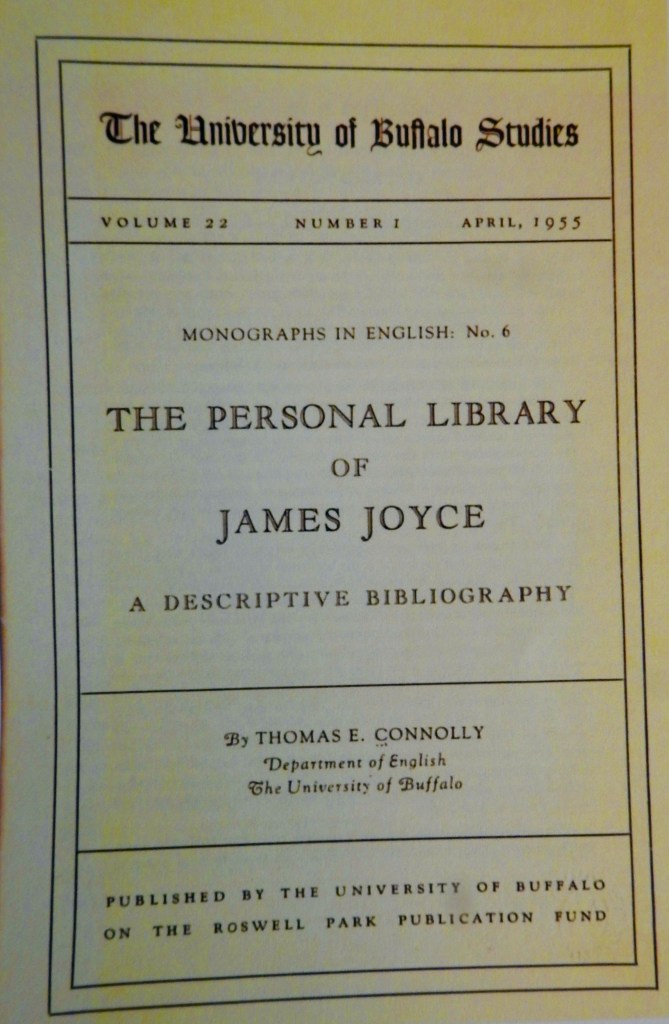
Researchers Linda McKee and Deborah W Walk mined Irish author James Joyce’s last personal library of documents, found an interesting note, and followed their instinct and interest, which resulted in their book, James Joyce and Jim Tully, The Paris Meeting, 1929.

Joyce’s last personal library of over 400 titles, taken safely from Paris by his wife Nora and son Giorgio in 1948-49, eight years after Joyce’s death in 1941, was bought by Margaretta Fryer Wickser from Buffalo, New York, and archived at the Lockwood Memorial Library of the University at Buffalo.  

The researchers found a note that intrigued them. Jim Tully’s note read:

To James Joyce, From one who one is proud to be his countryman, Jim Tully Paris – 1929.”

So, how did American author Jim Tully meet James Joyce in Paris in 1929? Researchers McKee and Walk follow the paper trail to Paris. 

James Joyce (1882-1941) and Jim Tully (1886-1947) were contemporaries. Joyce, born in Ireland, and Tully, an Irish immigrant living in Ohio, America, had much in common: poetry, pugilism, poverty in childhood, and public acclaim in literature in the 1920s and 1930s. They both ran foul of American literary censors. 

Joyce was itinerant across countries and Tully drifted across America as a ‘road kid.’ But there were differences: Joyce always wrote about his hometown Dublin and Tully wrote about life on the road. Joyce wrote few books and Tully was a prolific writer. Joyce moaned that he never had enough money and Tully was highly paid. 

Meeting together in Paris in 1929, Joyce was 47 years old and Tully was 43 – both had written their greatest works: Joyce’s Ulysses published in 1922 and Tully’s Beggars of Life published in 1924. They both had great works yet to be written: Joyce’s Finnegans Wake (1939) and Tully’s The Bruiser (1936). 

McKee and Walk have written a well-researched, interesting, and easy-to-read softcover book about the Paris meeting in 1929 of James Joyce and Jim Tully. It is extremely well presented with many colour photographs of their productive paper trail. 


Luxembourg Palace – the Senate building – in Paris is undergoing a restoration


Luxembourg Palace – the Senate building – in Paris is undergoing a restoration.

Previously the Luxembourg Palace, the Senate building in the Luxembourg Garden is undergoing restorations. It is located at 15 Rue de Vaugirard in the 6th arrondissement.

Marie de Medicis, wife of Henri IV of France, bought the land and commissioned plans in 1612 for the construction of the Luxembourg Palace (Palais du Luxembourg). Her husband Henri was King of France from 1589 to the time of his death on 14 May 1610, and the position passed to their son who became King Louis XIII from 1610 until his death in 1643.

So, the building was Marie’s special project until its completion in 1645. The original architect Salomon de Brosse, from 1615 to 1622, designed a square plan with pavilions on each side. The north side boundary wall is on Rue de Vaugirard, and the south side faces the 25-hectare (62-acre) Luxembourg Garden.

The palace was a residential building until the French Revolution on 5 May 1789. In 1791, it was declared the National Palace, turning it over to the people.

The French Revolution ended on 9 November 1799. Architect Jean Chalgrin redesigned the National Palace into a government legislative building from 1799 to 1805, and it became the home of the Directoire, the House of Peers from 1814 to 1848. 

Architect Alphonse de Gisors enlarged the building from 1835 to 1856.

It became the Senate building of the Third Republic from 1879. It belongs to the Senate to this day.

Odeon Theatre – two fires and from local hall to European theatre


Odéon Theatre – two fires and from local hall to European theatre.

Irish author James Joyce visited the Odéon Theatre on the rue de Corneille in the 6th arrondissement of Paris quite often. If not inside, then outside on the cloisters. He said of the Odéon Cloisters in 1903,

‘It was an appropriate enough meeting place, under the colonnade of a great theatre lined with bookstalls.’

Joyce was twenty years old at the time, and meeting 31-year-old Irish playwright John Millington Synge (1871-1909). 

Everytime I see pictures of JM Synge, I think of British-Canadian actor Keifer Sutherland (1966-). But, I digress …

James Joyce enjoyed browsing the bookstalls. In the area, French Adrienne Monnier’s bookstore, La Maison des Amis des Livres, was not yet there, which she established at 7 rue de l’Odéon in 1915. Neither was American Sylvia Beach’s Shakespeare and Company, the English-language bookstore she established in 1919 at 8 rue Dupuytren before moving to larger premises at 12 rue de l’Odéon in 1922. 

So, where once there were bookstalls at the Odéon, they are no more.

France has six national theatres, and the Odéon Theatre is popular because of its location next to the Luxembourg Garden. 

The original building, called the Salle (Hall) du Faubourg Saint-Germain, was constructed as a French Theatre between 1779-1782. Charles De Wailly and Marie-Joseph Peyre designed the Neoclassical building. The Theatre opened on 9 April 1782 with The Marriage of Figaro performed in 1784. 

In 1797, the architect Jean-Francois Leclerc remodelled the building and it was called the Théâtre de Odéon. Two years later, a fire destroyed the building on 18 March 1799.

It was reconstructed in 1808, designed by Jean Chalgrin, the same person who designed the Arc de Triomphe. It was named the Théâtre de l’Impératrice (Empress Theatre), but everyone still called it The Odéon. It burned down again in 1818.

Architect Pierre Thomas Baraguay built the present building, opened in September 1819. Third time lucky, because it still stands today.

At the same time, in 1819, the name was changed from the Théâtre de l’Impératrice to the Théâtre de l’Europe (Theatre of Europe) and is now a member of the Union of the Theatres of Europe. It’s worth a look as you pass it to visit the Luxembourg Garden.


French illustrator Antoine Meurant and the streets of Paris


French illustrator Antoine Meurant and the streets of Paris.

In its gallery-restaurant Le Select in Montparnasse, Paris, there is a solo collection of illustrations by Antoine Meurant. 

The collection of illustrations are everyday views of Paris and Parisian streets. 

Antoine Meurant has also illustrated Le Select – the American Bar and Restaurant established in 1925 – from the corner view. 


Les Invalides – cleaning of the north facade in progress


Les Invalides – cleaning of the north facade in progress.

The facade of Les Invalides in the 7th arrondissement of Paris is being cleaned. Cleaning is still in progress with a third of the north facade completed.  

Les Invalides is a building complex containing several museums and monuments, including the Army Museum. 

The north facade is long and large, and the main entrance to the building complex.

Les Invalides is a well-visited tourist site because the tomb of Napoleon Bonaparte (1769-1821) is on display in the Dome chapel. He was entombed on the site in 1861 when the chapel was completed. 


French Foreign Legion on parade on France’s National Day


French Foreign Legion on parade on France’s National Day.

The French National Day – Fête Nationale – known as Bastille Day, is celebrated annually on 14 July. The holiday is celebrated with parades, an aerial flyover, and fireworks. 

One of the groups marching in the parade included representatives of the French Foreign Legion – Légion étrangère.

The Foreign Legion is a corps of the French Army that includes infantry, cavalry, engineers, and airborne troops comprising uniquely of foreign nationals from a range of countries. 

It was established in 1831 during the army’s activities in Africa to train foreign recruits willing to serve in the French Armed Forces. There are about 9,000 foreigners, called legionnaires, serving in the Foreign Legion. 

Those who serve for more than three years can apply for French citizenship. Those who are wounded serving France can immediately apply for citizenship due to the provision known as:

‘French by spilled blood’ – ‘Français par le sang versé.’

Their logo is a gold grenade and their insignia flag is red and green – diagonally top left to bottom right (red on the top half and green on the bottom half) – with the gold grenade in the centre.